

Takis Talk Episode 11 –
Mike Savage on Building Safety, ICC Leadership, and Willdan’s Impact
Mike Savage on Building Safety, ICC Leadership, and Willdan’s Impact
Professional Platform
Share this episode of Takis Talk
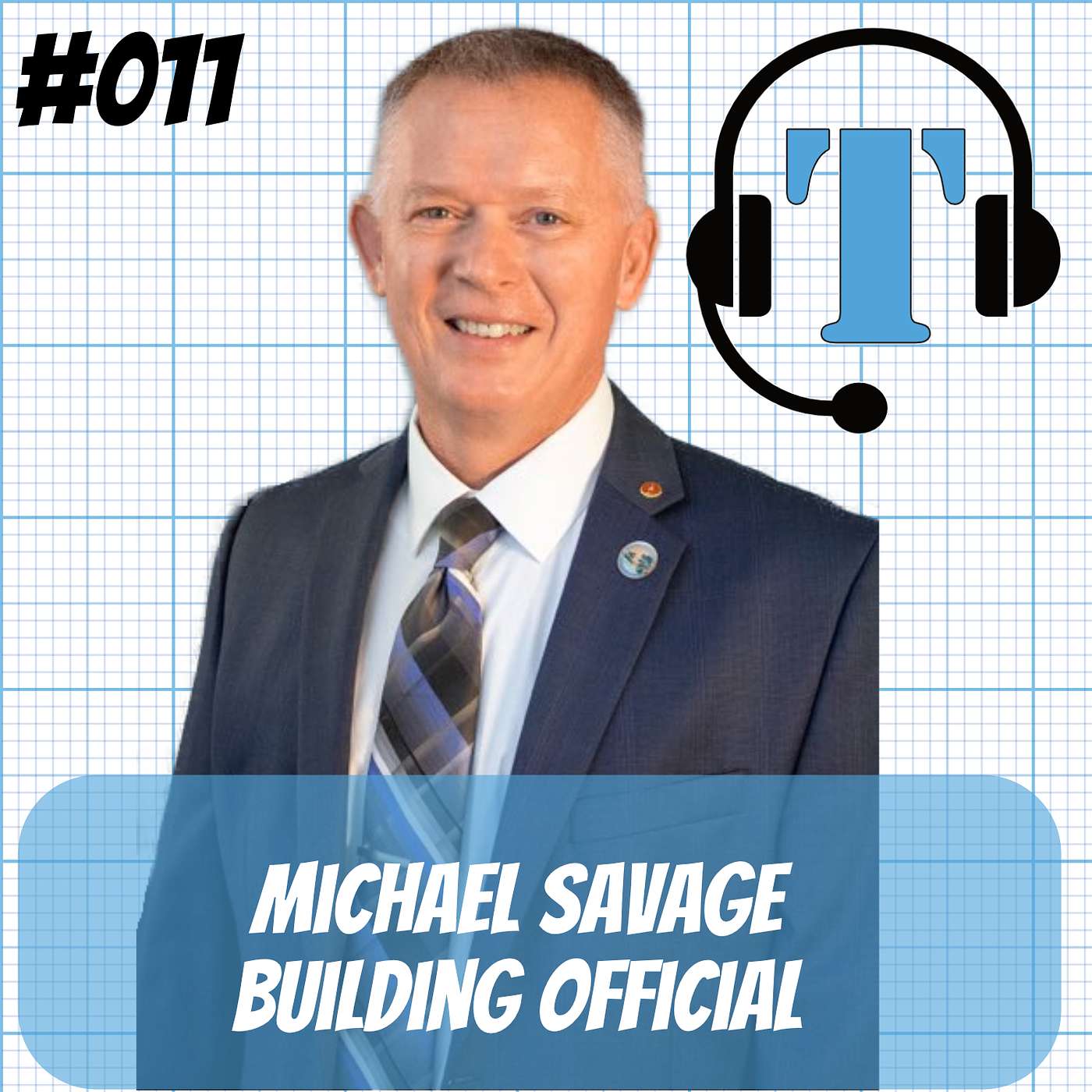
Takis Talk episode 11 dives into the life, leadership, and legacy of Mike Savage, a nationally respected building official, ICC executive board member, master electrician, and former military servicemember whose career has helped shape the modern building safety profession. In this in-depth conversation, Mike shares how a family construction legacy, frontline inspection work, and decades of code development experience have all fueled his mission to protect lives through safer buildings and better-trained professionals.
Takis Talk Episode 11: Mike Savage on Building Safety, Leadership, and Legacy
“Takis Talk episode 11” centers on Mike’s unique path from a contractor’s kid in Maryland to a nationally influential building official and code leader working with jurisdictions across the country. Today, Mike serves as the building official for the Town of Oakland, Florida through industry leader Willdan, where his team manages permitting, plan review, inspections, and building official services as a fully integrated solution for the jurisdiction. He also sits on the International Code Council (ICC) Board of Directors as Secretary/Treasurer, giving him a direct hand in the codes and standards that shape building safety worldwide.
Mike’s roots in construction run deep. His grandfather, Edward F. Savage, ran a general contracting company and raised 16 children, with the sons dropped off at job sites and the daughters helping run the farm and store. That environment instilled a strong work ethic and practical understanding of how buildings go together, which later powered Mike’s journey into obtaining and maintaining his master electrician’s license in Maryland. His commitment to the trades is also personal: Mike’s father died in a construction accident in 1968, a loss that sharpened his awareness of just how high the stakes are when it comes to codes, inspections, and life safety.
From Overwhelmed Inspector to National Leader
One of the most compelling parts of Takis Talk episode 11 is Mike’s candid reflection on his early years as an inspector. He admits he was miserable during his first six months, transitioning from hands-on construction to racing through 30–45 inspections a day, constantly afraid of missing something that could affect budgets, schedules, or lives. With minimal mentoring and a retiring predecessor in “short-timer” mode, he turned to self-study—digging into code books at night and even ordering VHS training tapes—to build the knowledge and confidence he needed.
That hunger for education led him to the Maryland Building Officials Association in the mid‑1990s, where networking and shared learning reinforced his commitment to staying in the profession long-term. Over the years, he carried that same drive into roles in Maryland, New Mexico, and Florida, working in jurisdictions that required everything from partial licensing to full licensing across all four trades, including building code administrator credentials. In Florida today, Mike holds an impressive 11 separate licenses—more than he has ever held in any other state—demonstrating the depth and breadth of his technical and administrative qualifications.
ICC, NFPA, UL, and IAEI: Shaping the Codes That Shape Our World
Takis Talk episode 11 also highlights Mike’s extensive service in the national and international codes and standards arena. Through his governmental membership with ICC, he serves on the ICC Board of Directors and currently holds the officer role of Secretary/Treasurer, helping guide strategy, policy, and member-focused initiatives for the code community. His commitment extends well beyond ICC: he has served on NFPA code-making panels for the National Electrical Code (including as chair of Code-Making Panel 15), as a member of NFPA 80 (Fire Doors and Windows), and on multiple UL Standards Technical Panels such as UL 10C for fire doors.
Mike traces much of this journey back to joining the Inte
Takis Talk episode 11 dives into the life, leadership, and legacy of Mike Savage, a nationally respected building official, ICC executive board member, master electrician, and former military servicemember whose career has helped shape the modern building safety profession. In this in-depth conversation, Mike shares how a family construction legacy, frontline inspection work, and decades of code development experience have all fueled his mission to protect lives through safer buildings and better-trained professionals.
Takis Talk Episode 11: Mike Savage on Building Safety, Leadership, and Legacy
“Takis Talk episode 11” centers on Mike’s unique path from a contractor’s kid in Maryland to a nationally influential building official and code leader working with jurisdictions across the country. Today, Mike serves as the building official for the Town of Oakland, Florida through industry leader Willdan, where his team manages permitting, plan review, inspections, and building official services as a fully integrated solution for the jurisdiction. He also sits on the International Code Council (ICC) Board of Directors as Secretary/Treasurer, giving him a direct hand in the codes and standards that shape building safety worldwide.
Mike’s roots in construction run deep. His grandfather, Edward F. Savage, ran a general contracting company and raised 16 children, with the sons dropped off at job sites and the daughters helping run the farm and store. That environment instilled a strong work ethic and practical understanding of how buildings go together, which later powered Mike’s journey into obtaining and maintaining his master electrician’s license in Maryland. His commitment to the trades is also personal: Mike’s father died in a construction accident in 1968, a loss that sharpened his awareness of just how high the stakes are when it comes to codes, inspections, and life safety.
From Overwhelmed Inspector to National Leader
One of the most compelling parts of Takis Talk episode 11 is Mike’s candid reflection on his early years as an inspector. He admits he was miserable during his first six months, transitioning from hands-on construction to racing through 30–45 inspections a day, constantly afraid of missing something that could affect budgets, schedules, or lives. With minimal mentoring and a retiring predecessor in “short-timer” mode, he turned to self-study—digging into code books at night and even ordering VHS training tapes—to build the knowledge and confidence he needed.
That hunger for education led him to the Maryland Building Officials Association in the mid‑1990s, where networking and shared learning reinforced his commitment to staying in the profession long-term. Over the years, he carried that same drive into roles in Maryland, New Mexico, and Florida, working in jurisdictions that required everything from partial licensing to full licensing across all four trades, including building code administrator credentials. In Florida today, Mike holds an impressive 11 separate licenses—more than he has ever held in any other state—demonstrating the depth and breadth of his technical and administrative qualifications.
ICC, NFPA, UL, and IAEI: Shaping the Codes That Shape Our World
Takis Talk episode 11 also highlights Mike’s extensive service in the national and international codes and standards arena. Through his governmental membership with ICC, he serves on the ICC Board of Directors and currently holds the officer role of Secretary/Treasurer, helping guide strategy, policy, and member-focused initiatives for the code community. His commitment extends well beyond ICC: he has served on NFPA code-making panels for the National Electrical Code (including as chair of Code-Making Panel 15), as a member of NFPA 80 (Fire Doors and Windows), and on multiple UL Standards Technical Panels such as UL 10C for fire doors.
Mike traces much of this journey back to joining the International Association of Electrical Inspectors (IAEI) in 1995 to find the electrical education he desperately wanted as a new inspector, eventually rising to division and international offices. Through these positions, he gained a deep understanding of how products are tested, listed, and approved, which now allows him to explain complex requirements clearly in the field and at the policymaking level. He views all of this committee, board, and panel work as another form of public service—one that, in his wife’s words, “protects lives” by improving codes and standards behind the scenes.
Technology, Remote Inspections, and AI: A Balanced View
For jurisdictions wrestling with technology, Takis Talk episode 11 offers a grounded, real-world perspective from someone who has actually implemented innovation at scale. Long before COVID‑19, Mike was working on a county rule for remote video inspections (RVIs), and when the pandemic hit, he was able to roll out a full RVI program overnight. He shares where remote inspections work well—such as re‑roof projects, deck nailing and dry-ins, water heater replacements, and HVAC change-outs—and where he drew a hard line, such as electrical inspections where tactile checks on bonding and connections can be critical.
He also walks through Florida’s statutory framework that allows private providers to perform remote inspections, including the limits on audits and the continuing oversight responsibilities of the building department. On the AI side, Mike has evaluated emerging AI plan review tools but remains cautious, noting that some systems cannot clearly confirm whether they are checking against the correct state-specific code edition versus base I‑Codes. In Takis Talk episode 11, he likens the current AI landscape to early-era search engines around 1999–2000: promising, noisy, and not quite ready to fully trust with core life-safety tasks.
Leadership, Management, and the Case for Building Officials
A recurring theme in Takis Talk episode 11 is how building officials are often underestimated inside their own organizations. Mike describes leading a department that grew from 46 to 94 staff and from 46,000 inspections per year to as many as 310,000 inspections in a 12‑month period, all while managing budgets, asset planning, and personnel issues at a scale comparable to senior county administrators. Yet he has heard comments like “you building guys,” revealing how often building professionals are still viewed as “the construction guys with tools” rather than high-level managers and strategic leaders.
To change that narrative, Mike invested heavily in his own education, earning an associate degree in construction management, a bachelor’s in business administration, and an MBA—ultimately holding more advanced degrees than most of his supervisors. He urges building officials to be more intentional about communicating their department’s accomplishments, metrics, and leadership contributions, particularly during budget presentations and executive interactions. For him, the job is not just about catching violations; it is about leading large teams, managing risk, enabling economic development, and safeguarding public health, safety, and welfare—skills that translate directly to higher-level administrative roles.
Willdan, Oakland, and Relationship-Driven Service
The episode also showcases Mike’s current work with Willdan, a publicly traded firm that provides building and safety, fire, energy, sustainability, engineering, and program administration services to jurisdictions across the country. Before joining the company, he first encountered Willdan as a client while struggling in Marion County to meet Florida’s mandated plan review deadlines amid staffing shortages and extended employee absences. Willdan stepped in with staff augmentation and helped reduce his plan review backlog from roughly 1,700–2,000 plans down to a few hundred in a short period, demonstrating the firm’s ability to support overloaded departments without taking over their identity.
Now, as Willdan’s contracted building official for Oakland, Florida, Mike focuses on two priorities: ensuring legal and technical compliance, and building authentic relationships. One of his first moves in Oakland was to review and update all permitting and private provider forms to align with current Florida statutes, recognizing that forms are often the only “face” the customer sees. He also personally introduced himself to the city manager and other leaders, emphasizing that he wants them to feel comfortable calling him directly for help, feedback, or complaints, and stressing that Willdan’s approach is relationship-based, not pressure-sales-driven.
The Human Side: Family, Fitness, and Service Mindset
What makes Takis Talk episode 11 especially memorable is how much of Mike’s personality and life philosophy comes through. A former Army servicemember, he still draws on the lessons of military leadership, including the impact of meeting General Norman Schwarzkopf early in his career, which shaped how he treats everyone from senior leaders to workers in the trench. He carries that same respect and humility into mentoring younger inspectors and future leaders, believing that every interaction—good, bad, or ugly—is a teaching opportunity.
Outside of work, Mike is a second-degree black belt in World Taekwondo Federation Taekwondo, practicing poomsae (forms) daily as part of an intense morning routine that keeps him flexible and focused. He jokes about discovering that poomsae is, by definition, a kind of “dance,” even though he refuses to dance at conferences and prefers to stand on the sidelines. He is also a devoted family man with four sons and one daughter, who treasures time spent golfing (badly, by his own admission) and working out with his children, including a son currently serving in the military whom he dreams of one day saluting as a warrant officer.
By the end of Takis Talk Episode 11, one thing is clear: Mike Savage is far more than a building official or code nerd—he is a leader, educator, and servant whose career has quietly influenced how buildings are inspected, how codes are written, and how professionals are trained across the United States and beyond. For building officials, inspectors, city managers, and anyone interested in the future of building safety and leadership, this episode is a powerful reminder that our work is about much more than permits and inspections; it is about people, legacy, and protecting lives in every built space we touch.