

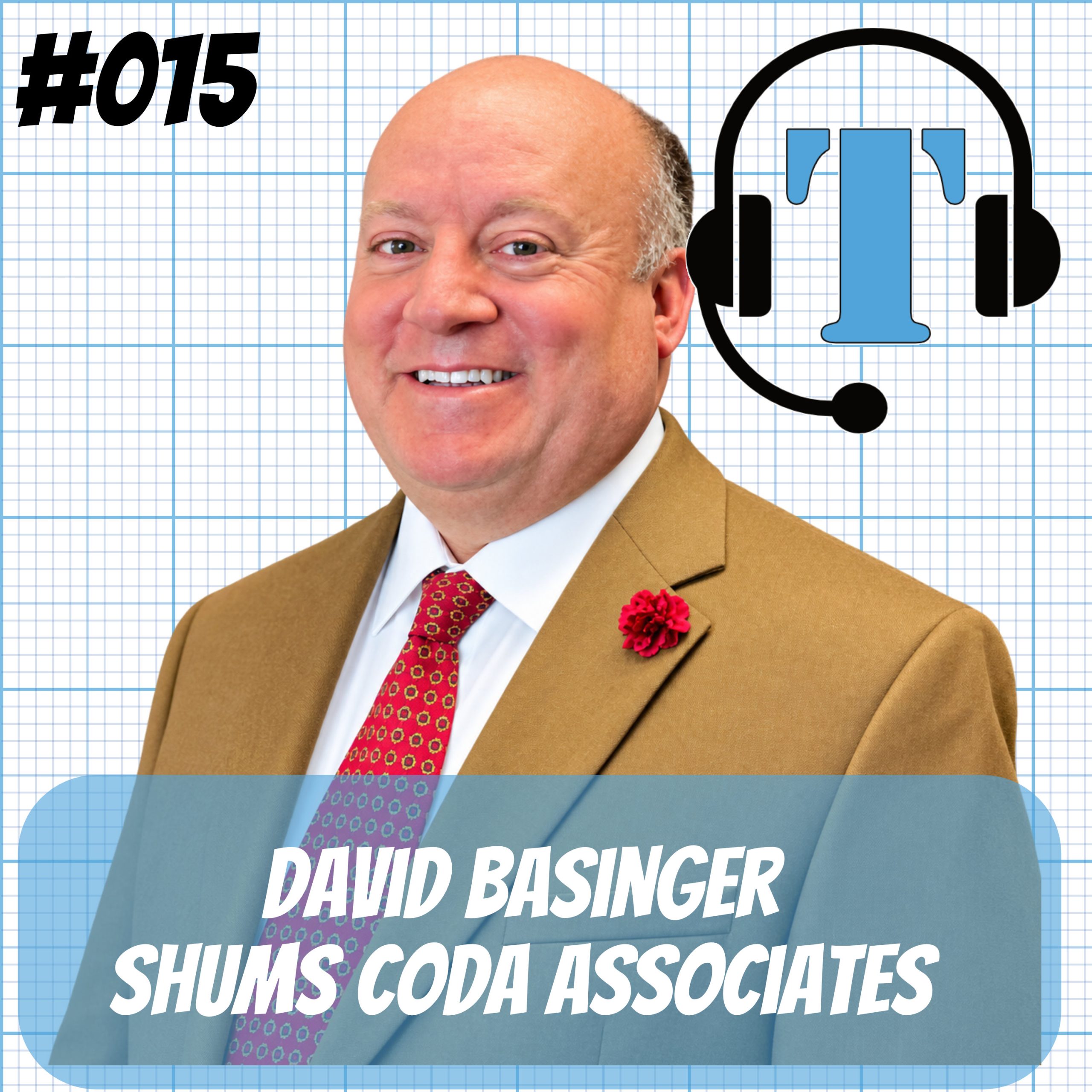
Takis Talk Episode 15 – Dialects of Code: Solving the Building Inspector and Plans Examiner Shortage David Basinger
Building codes may be printed in one language, but anyone who has spent time in a building department knows the profession speaks in several different dialects.
The architect says, “It meets the intent of the code.”
The plans examiner responds, “Please identify the applicable code section.”
The contractor says, “We have always built it this way.”
Then the inspector arrives and says, “That may be what the plans show, but that is not what you installed.”
Those different perspectives are part of what makes the building-safety profession interesting. They can also make it difficult to recruit, train and retain the next generation of building inspectors and plans examiners.
In this episode of Takis Talk, host David Basinger speaks with David Basinger, CEO of Shums Coda Associates, about the growing building inspector and plans examiner shortage, the importance of field experience, the role of private consultants, differences in code interpretation and the future of artificial intelligence in plan review.
With more than three decades of experience in architecture, code consulting, plan review and municipal building services, Basinger offers a perspective shaped by both sides of the permit counter.
Why Building Departments Are Struggling to Hire
Cities and counties across the country are competing for a limited number of experienced building inspectors, plans examiners and building officials.
The most difficult candidates to find are often the people every jurisdiction wants: experienced, customer-focused and fully certified combination inspectors who can confidently handle residential and commercial building, electrical, plumbing and mechanical inspections.
The problem is simple: many of those professionals have retired, are approaching retirement or are already committed to another jurisdiction or consulting firm.
At the same time, public agencies often need staffing flexibility. A building department may need additional help because of vacations, vacancies, development surges or a large project. However, a city may only need an inspector for a few days each week, while consulting firms need enough predictable work to keep qualified employees fully assigned.
This creates a difficult mismatch.
Cities want highly experienced professionals available on demand. Consultants need stable assignments. Meanwhile, the limited pool of certified professionals continues to shrink.
Stop Waiting for the Perfect Candidate
One of the most important lessons from the conversation is that building departments may need to reconsider how they define a qualified candidate.
Jurisdictions understandably want someone who can perform every type of inspection or review on the first day. In reality, the perfect combination-certified candidate may not exist—or may not be interested in the position.
A candidate with several residential certifications, strong judgment, a willingness to learn and a good approach to customer service may be able to handle most of a jurisdiction’s workload while continuing to develop.
That person may be a better long-term investment than leaving the position vacant while waiting for a candidate with every possible certification.
Technical knowledge matters, but Basinger emphasizes the importance of attitude, curiosity and self-awareness. A successful inspector must know the code while also recognizing when to research an issue, ask a question or seek assistance from someone with more specialized knowledge.
The best inspectors are not always the people who claim to know everything. They are often the people who care enough to keep looking until they understand the problem.
How to Recruit the Next Generation of Building Inspectors
Solving the building inspector shortage requires the profession to recruit beyond the traditional applicant pool.
Potential candidates may be found in:
- Community college building-safety programs
- Construction trades
- Architecture and engineering firms
- High school career and technical education programs
- Permit technician positions
- Military construction or facilities roles
- Property maintenance and code enforcement
- Related public works or facilities positions
The profession also needs to do a better job explaining what building inspectors and plans examiners actually do.
Many students and early-career professionals have never considered building safety because they do not know the career exists. They may understand construction, architecture or engineering, but they have never been shown how those skills translate into municipal service.
Building inspection can provide a strong career for someone who enjoys construction, problem-solving, public service and working outside an office. Plan review can appeal to professionals who enjoy technical analysis, building systems and helping projects move from design to construction.
Recruitment should not begin when a vacancy is posted. Building departments should be speaking at schools, offering internships, creating trainee positions and introducing employees in related classifications to building-safety careers.
Field Experience Matters for Plans Examiners
Plans examination is more than locating code sections and adding correction comments to a drawing.
A plans examiner must be able to look at a two-dimensional set of plans and understand how the building will actually be assembled. That includes recognizing load paths, identifying missing details and understanding how architectural, structural, mechanical, plumbing and electrical systems interact.
Construction experience helps reviewers visualize what the plans represent.
Architecture and engineering education can provide a strong technical foundation, but practical field exposure is equally valuable. A reviewer who has seen framing, foundations, structural connections, fire assemblies and mechanical systems installed is often better prepared to identify the details that matter.
This is one reason plans examiner development can be more difficult than inspector development. A new inspector can observe construction in real time. A new plans examiner must learn to visualize the completed structure from drawings, calculations and specifications.
Effective training programs should therefore combine classroom education, code study, field observation, mentoring and progressively more complex reviews.
Code Compliance Requires Judgment
The episode title, “Dialects of Code,” reflects a reality familiar to every building official: knowledgeable professionals can read the same code section and reach different conclusions.
Codes contain clear requirements, but they also contain exceptions, undefined conditions, local amendments and areas that require professional judgment.
Basinger explains that effective plan review is not simply about finding violations. It is about understanding minimum life-safety requirements and helping applicants find a compliant path forward.
A technically correct correction comment can still be unhelpful if it does not clearly identify the problem or explain what information is needed.
The strongest plans examiners understand the pressures facing architects, engineers, contractors and owners. That does not mean ignoring the code. It means communicating requirements clearly and avoiding unnecessary cycles of corrections and resubmittals.
Building departments should train employees to distinguish among:
- A specific code requirement
- A local amendment or adopted policy
- A preferred construction practice
- An individual reviewer’s personal preference
That distinction can improve consistency, reduce frustration and build trust with applicants.
Can Third-Party Plan Review Solve Permit Delays?
Third-party plan review and inspection services can help cities manage vacancies, workload increases and specialized projects. However, outsourcing does not automatically solve staffing or permit-delay problems.
A private reviewer still needs time to perform a thorough review. Expedited processing cannot mean skipping the analysis necessary to identify critical safety issues.
Jurisdictions must also establish standards for consultant qualifications, communication, quality control and authority.
The building official should remain responsible for the jurisdiction’s interpretations and enforcement policies. Consultants should operate as an extension of the public agency—not as a separate authority creating their own requirements.
A successful public-private partnership requires clear expectations regarding turnaround times, correction formats, escalation procedures, customer service and consistency with local interpretations.
Consultants can provide valuable flexibility, but they should supplement a jurisdiction’s capacity without causing the city to lose control of its institutional knowledge.
Will AI Replace Building Inspectors and Plans Examiners?
Artificial intelligence is increasingly promoted as a solution to plan-review delays. Basinger offers a more measured assessment.
AI may be useful for reviewing submittal completeness, checking whether required documents are present, organizing files and identifying basic information. These administrative applications could reduce the time permit technicians and reviewers spend processing incomplete applications.
Full automated plan review is much more difficult.
Building codes vary by state, city and county. Local officials develop interpretations based on adopted amendments, policies, project conditions and community expectations. Many of those decisions are not captured in the model code.
AI may recognize text, but it cannot easily reproduce the experience of an inspector who senses that something in the field does not look right or a plans examiner who recognizes that separate systems do not coordinate.
Technology will likely become an important tool for building departments, but it should support qualified professionals rather than replace human judgment.
Building a Workforce Pipeline
The building inspector and plans examiner shortage will not be solved by one recruiting campaign, one certification class or one new technology platform.
It will require a coordinated workforce strategy.
Building departments should identify promising employees early, provide structured mentoring, fund certifications and allow developing professionals to gain progressively more complex experience.
Consulting firms can also serve as training grounds by placing employees in different jurisdictions and exposing them to a wider variety of construction.
Most importantly, public agencies and private firms must stop viewing every employee transition as a loss. When a trained consultant moves into a municipal position—or a city employee gains broader experience elsewhere—the profession still benefits if that person remains in building safety.
The goal should be to grow the overall pool of capable professionals.
Listen to “Dialects of Code”
This episode is for building officials, inspectors, plans examiners, architects, engineers, city managers and anyone responsible for improving municipal permitting services.
David Basinger shares practical lessons about recruiting inspectors, developing plans examiners, using consultants responsibly, interpreting code language and preparing for the growing role of technology.
Listen to “Dialects of Code: Solving the Building Inspector and Plans Examiner Shortage” on Takis Talk.
Follow Takis Talk on LinkedIn, subscribe on your preferred podcast platform and share this episode with someone who may be considering a career in building safety.
The profession needs more qualified people—and the next great inspector or plans examiner may simply be waiting for someone to introduce them to the opportunity.